Removal Company Camden

Our removal company in Camden handles home and office moves with a practical, organised approach that keeps the process straightforward from first enquiry to delivery. We work across the main removals tasks people need most: lifting, loading, transport and careful placement at the destination. If you are planning a flat move, a house move or a business relocation, our service is set up to keep items secure, routes clear and the day well paced.
Camden moves often involve varied access, mixed item sizes and tight timings, so it helps to choose a team that can manage the details without making the job feel complicated. We can support local removals, longer-distance moves and single-item transport where a full lorry is not required. For a simple overview of what we offer, you can start with our removal services page, then decide which elements matter most for your move.
If you already know the date you want to move, it is sensible to request a quotation once you have a rough list of what needs to go. A clear outline of rooms, access and any bulky pieces helps us suggest the most suitable vehicle and crew. When you are ready, send through the details and ask for a quote; we will take it from there.
House and flat removals planned around access

Domestic removals in Camden can range from compact studio flats to larger family homes, and the main difference is usually not just volume but how the property is arranged. Stairs, lifts, shared hallways and limited loading space all affect the way a move is planned. We look at the likely sequence of loading so that the team can move efficiently while keeping attention on furniture, boxed items and fragile pieces that need a steadier hand.
For many households, a home moves service is the most useful starting point because it covers the core tasks involved in moving from one address to another. In practice, that means handling larger furnishings, boxed belongings, household appliances and the smaller pieces that are easy to overlook until the final day. If your home move includes particular items such as mirrors, framed artwork or awkward storage units, those can be planned into the move rather than treated as an afterthought.
Useful details to have ready include the number of rooms, the floor level at each address, whether parking is nearby and whether any items need dismantling before transport. None of this needs to be elaborate; a short written summary is often enough to shape the quote. You can also note anything that should be handled separately, such as a piano, a heavy wardrobe or a boxed archive.
Office removals and workplace relocations

Office removals need a different pace from domestic moves because business premises usually contain furniture, files, IT equipment and workstations that must be kept in sequence. A sensible plan aims to reduce confusion at the new site by grouping desks, chairs, screens, storage units and boxes in a way that makes unpacking easier. Our office removals service is suited to organisations that want the move handled in an orderly, professional way rather than pieced together at the last minute.
Some workplaces need a broader relocation plan that includes several rooms, multiple departments or a change of premises as part of a larger reorganisation. In those cases, our office relocation services page explains a wider approach to transport and setup. The priority is usually to move the right items together and keep the process understandable for whoever is coordinating the move at either end.
Before the moving day, it helps to agree what stays assembled and what should be prepared for transport. Items with cables, drawers or loose fittings may need attention so they can be moved safely and reassembled without confusion. Plan the handover points too, especially where keys, access codes or loading bays are involved, because even a well-packed move can become slow if the route in and out is unclear.
Packing support, boxes and sensible preparation
Packing is often the part of the move that takes the most time, which is why many customers prefer to separate it from the loading itself. We can support moves where items are already boxed, as well as moves where packing materials and preparation need to be considered alongside the transport plan. For more detail on preparation materials, see our packing and boxes page.
Some customers also prefer a fuller packing service so that fragile or mixed items are organised before collection day. Our packing and unpacking services can be useful where time is limited or where you want the packing to be managed in a more systematic way. This can help with breakables, books, kitchenware and other belongings that benefit from careful grouping rather than being rushed into random boxes.
When preparing for a quote, try to separate the move into broad categories rather than listing every fork and mug. A short inventory by room is often enough to show scale, and any unusually bulky items can be highlighted separately. If you know a staircase is narrow, a hallway is tight or a lift is small, that information is worth including because it may affect how the team is scheduled and what vehicle is most suitable.
Furniture, specialist items and careful handling
Furniture removals are often the centre of a house move because sofas, beds, tables and wardrobes usually determine how much space is needed and how the loading order works. Our furniture removals service is aimed at moving these larger items without unnecessary handling or pressure on the pieces themselves. Where practical, the team can work in a way that keeps items stable during transit and easier to position on arrival.
Some belongings need extra care because they are heavy, delicate or awkward to carry. A piano, for example, is not just another large object; it has shape, weight distribution and handling requirements that deserve proper planning. If that is relevant, our piano removals page gives a clearer idea of the type of move involved. The same principle applies to other valuable or unusually shaped items: they should be considered early so the move is not improvised later.
It also helps to identify pieces that may need partial dismantling or protective wrapping before loading. That can include bed frames, large shelving, glass-topped furniture or items with detachable legs and fittings. Careful handling is usually more about preparation than speed, so it is better to flag difficult items at the enquiry stage than to leave them until the vehicle is already on site.
About Camden

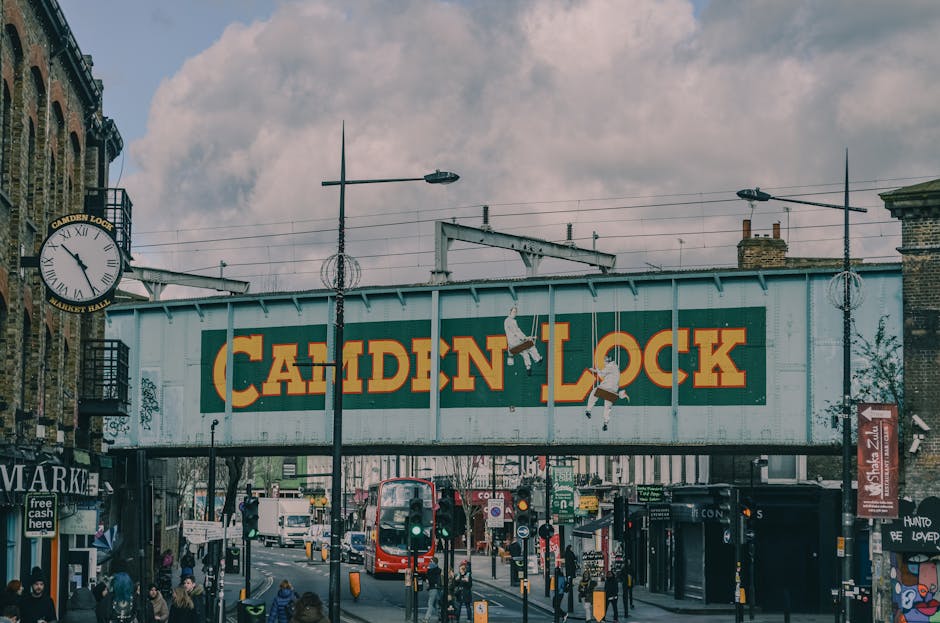
Camden is a district in north London with a strong identity shaped by transport, markets, music, education and a varied built environment. The area developed significantly during the nineteenth century as rail links expanded across north London, and today it includes a mix of residential streets, busy commercial corridors and cultural landmarks. Camden Town itself is closely associated with the Regent’s Canal, which runs through the wider area and provides one of the most distinctive routes in the borough, linking industrial heritage with present-day waterside walking paths. The canal is part of a broader network that helped shape movement and trade in the capital, and the surrounding streets still show layers of that history in warehouse conversions, terraces and adapted commercial buildings. Camden also includes parts of Regent’s Park to the south-west, one of London’s major royal parks, and the district’s geography bridges dense urban streets with open green space. Its public transport connections are a major part of everyday life here, with Camden Town station on the Northern line forming a key node and Euston and King’s Cross within the broader local context. The area is known for cultural institutions too, including music venues and the Roundhouse, a landmark performance space with a history that reflects Camden’s long association with the arts. Markets, independent shops and a lively food scene contribute to a busy street culture, while nearby neighbourhoods such as Kentish Town, Primrose Hill and Belsize Park give the district a varied residential character. As a result, Camden combines historic urban fabric, strong transport links and a widely recognised cultural profile within central north London.
Storage, timing and moves that need flexibility

Not every move goes straight from one address to the next, and in those situations storage can be part of a sensible plan. Our storage page covers the idea of keeping items aside temporarily when keys are delayed, building work is unfinished or the new property is not quite ready. This can be especially useful for mixed moves where furniture is ready but smaller items are still being sorted, or where the handover date changes at short notice.
Some customers also need a more flexible moving schedule, especially where access times are narrow or when several parts of the move need to happen in stages. In those cases, it may help to think about the order in which boxes, furniture and specialist items should be moved so that the most important belongings are available first. If you are comparing options, our same day removals page is useful for understanding how an urgent move is approached when time matters more than a long lead-in.
For the simplest start, keep your notes brief but specific: what is moving, what is staying behind and what cannot be missed on the day. That three-part summary is often enough to make an enquiry productive. If you want to go ahead, ask for a quotation today and we will help you shape the move around the details you already know.
House removals for local and longer-distance moves
Some customers need a straightforward house move, while others are relocating from Camden to a different part of London or further afield. Our house removals service is designed to cover the common practical steps involved in moving a complete household, including furniture, boxed belongings and other essential items that need to travel together. The focus is on making the move coherent rather than treating each object in isolation.
There are also situations where a simpler helper style works better than a full household move. Our man and van service is useful for smaller jobs, partial moves and the kind of transport task that does not require a large removal setup. Where customers prefer a similar approach but with a different wording, man with a van and man with van are also listed on the site, giving a choice of pages that can help you identify the most suitable type of move.
Think about the destination first: if you are moving to a new home, a temporary address or a mixed-use property, the unloading side can matter as much as the loading side. Clear room labels, basic access instructions and a sensible order for essential items can make the final stage far smoother. For the most relevant next step, our pricing and quotes page can help you decide how to request an estimate.
Single items, furniture collection and useful vehicle options
Not every booking is a complete move. Sometimes the task is to collect a sofa, move a bed, or transport a single bulky item that cannot be managed in an ordinary car. Our furniture pick-up service is aimed at those smaller but still demanding jobs where item size, weight or handling is the main concern. This can suit customers who have bought furniture privately, are clearing a room or simply need one piece moved safely.
To support different load sizes, the site also includes removal van and removal truck hire pages. These are helpful when you want to understand the vehicle side of the move before booking. Some moves are best handled with a more compact vehicle, while others need a larger load area so that furniture and boxes can travel without being stacked awkwardly. The right option depends on volume, access and how the items are arranged for collection.
The more clearly you describe the items, the easier it is to avoid a mismatch between the transport and the task. Dimensions, quantity and access details usually matter more than exact brand names or decorative descriptions. If you know there are stairs, restricted parking or a long carry from the door to the vehicle, include that too, because those practical details are often the deciding factor in the quote.
Who the service is suitable for
We work across a range of move types, from private households to businesses and smaller one-off transport jobs. That makes the service useful for tenants, homeowners, landlords, offices and people who need help with individual items or mixed loads. The common thread is practical removals work that is organised around the nature of the property, the size of the load and the level of handling the items require.
The site also includes broader pages such as removals, removal companies and commercial moves, which can help if you are comparing the main service category before making an enquiry. These pages are useful where you want to see how the different service areas fit together, especially if your move is not a simple point-to-point household job. In many cases, the best option is the one that matches the scope most closely rather than the one with the broadest wording.
If you are still deciding, it can help to write down the one thing that makes the move unusual: a difficult staircase, a piano, a business item, a storage gap or a very small time window. That single note often tells us more than a long message. Request a quotation when you are ready, and we will use the information you provide to suggest the most appropriate removals approach.
Quotation details and final arrangements
The quotation stage is usually the point where a move becomes concrete, because it turns a general plan into something that can be scheduled properly. A helpful enquiry includes the addresses involved, the main items to be moved, the access at each property and whether packing support, specialist handling or temporary storage may be needed. If you are comparing dates, it is useful to mention any flexibility so the move can be arranged in a way that suits the rest of your plans.
For customers who want to understand how charges are approached, the pricing and quotes page is the most direct place to start. It gives a sensible route into the quotation process without requiring you to guess what level of detail is needed. If you have concerns about security, scheduling or how belongings are handled during the move, other site pages such as insurance and safety and health and safety policy can also help frame the right questions before you book.
When you are ready, ask for a quotation now. If your move is simple, a short note may be enough; if it is more involved, a fuller summary will help us respond more accurately. Either way, the aim is to make the next step easy to understand and practical to arrange.