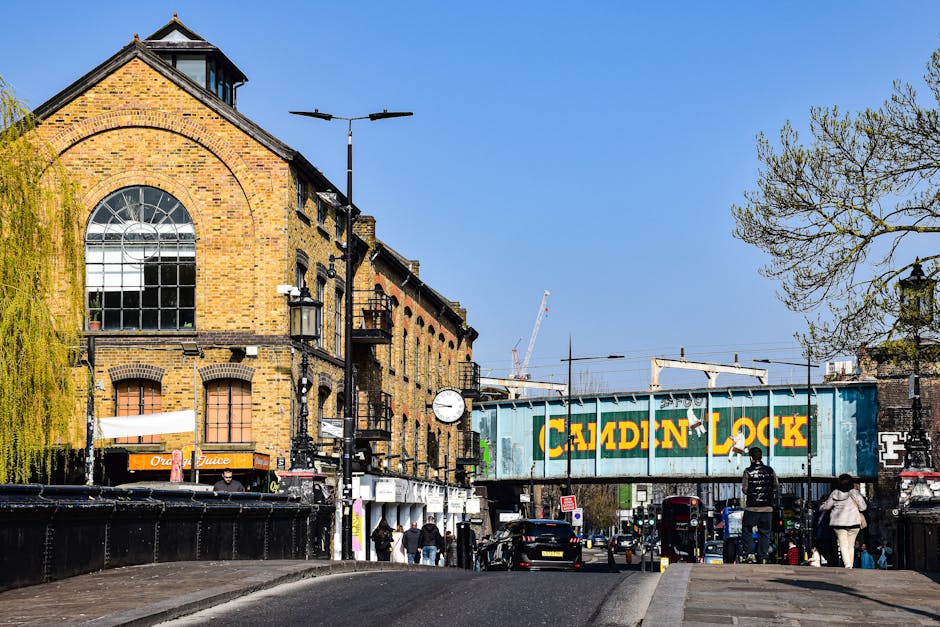
What to know about Camden council parking rules for removals
If you are moving in Camden, parking can become the awkward little detail that derails an otherwise well-planned day. The van arrives, the boxes are ready, and then everyone is standing there looking at a double yellow line thinking, well, that is not ideal. Knowing what to know about Camden council parking rules for removals helps you avoid delays, fines, stressed-out neighbours, and the sort of last-minute scramble that turns a simple move into a long afternoon.
This guide explains the practical side of moving in Camden: how parking controls usually affect removals, why planning ahead matters, what to check before the van turns up, and how to keep things moving smoothly on the day. It is written for people who just want the job done properly, without surprises. And yes, that includes those tiny Camden streets where a 3.5-tonne van suddenly feels about twice its size.
Table of Contents
- Why Camden council parking rules for removals matter
- How the parking rules work in practice
- Key benefits and practical advantages
- Who this is for and when it makes sense
- Step-by-step guidance
- Expert tips for better results
- Common mistakes to avoid
- Tools, resources and recommendations
- Law, compliance, standards, or best practice
- Options, methods, or comparison table
- Case study or real-world example
- Practical checklist
- Conclusion
- Frequently asked questions
Why Camden council parking rules for removals Matters
Camden is one of those boroughs where parking can change everything. A removal van does not need much chaos to get stuck; a narrow road, a busy school run, a suspended bay, or a resident permit zone can be enough. If your van cannot stop close to the property, every box becomes heavier, every trip takes longer, and the risk of damage goes up. Simple as that.
That is why the parking side of removals matters as much as the packing side. A well-organised move is not just about having strong people and a big van. It is about making sure the vehicle can legally stop, load, and unload near the property without creating a problem for the driver, the customer, or other road users.
In our experience, many moving-day issues are not really moving issues at all. They are parking issues wearing a moving-day hat.
For homeowners, renters, landlords, and businesses, a little preparation can save a surprising amount of time. It can also reduce the chance of a parking ticket or a frustrated call from the driver saying, "I am here, but I am half a street away and there is nowhere to pull in."
How Camden council parking rules for removals Works
The exact rules depend on the street, the time of day, and the type of restriction in place. Camden includes a mix of controlled parking zones, permit areas, loading restrictions, yellow lines, bay restrictions, and streets with tight access. That means the same removal van may be fine in one road and badly out of place in the next.
For removals, the practical question is not just whether parking exists, but whether the vehicle can legally stop long enough to load or unload. In many cases, removals are treated as a short-stay activity, but short-stay does not mean unrestricted. You may need to use a loading bay, observe time limits, display the right permission, or avoid certain restrictions altogether.
The safest approach is to plan as if parking will be limited. That means checking the location, identifying the nearest legal stopping point, and allowing extra time for the van to position itself. On a busy Camden morning, that extra bit of planning can feel boring. It is not boring when the sofa is halfway out the door and traffic is creeping past.
For larger moves, you may also need to think about the size of vehicle. A removal truck may offer great capacity, but if the street is narrow or access is awkward, a smaller van or shuttle approach can be more practical. If you are comparing vehicle options, it can help to look at a suitable removal van versus larger transport, especially for tight central streets.
One more thing: restrictions can apply differently to loading and waiting. A bay may allow loading for a short period but not all-day parking. That distinction matters. A lot. You do not want to discover it while the wardrobe is already on the pavement.
Key Benefits and Practical Advantages
Getting the parking side right gives you more than just compliance. It improves the whole move.
- Less walking distance: Boxes, furniture, and appliances can move straight from door to vehicle without unnecessary carrying.
- Faster turnaround: When the van is positioned legally and sensibly, loading usually runs more smoothly.
- Lower risk of damage: Shorter carry distances mean fewer bumps, fewer tight turns, and less chance of scraping items or doorframes.
- Reduced stress: Nobody enjoys trying to read parking signs while holding a kettle and a roll of tape.
- Better neighbour relations: Blocking driveways or sitting awkwardly in a narrow street creates friction fast.
- Less disruption to the schedule: A move that starts late often finishes late. Then the whole day feels off-balance.
There is also a commercial advantage if you are moving a business. For office moves or shop relocations, parking control is part of continuity planning. If the vehicle cannot stop near the entrance, the move may stretch into business hours, which is not ideal when staff, clients, or deliveries are involved. In those cases, a service such as office removals can be planned around access and timing more carefully.
To be fair, parking rules do not exist to make your life difficult. They exist to manage limited space. Once you see them that way, the job becomes less about battling the system and more about working with the street as it is.
Who This Is For and When It Makes Sense
This topic matters to almost anyone moving in or out of Camden, but it is especially useful if you are dealing with any of the following:
- flat moves in busy residential streets
- house removals on roads with permit controls
- student moves with tight timing and shared access
- office relocations that need a clear loading point
- moves involving large furniture or bulky items
- last-minute same-day removals where planning is tighter than usual
If you live in a flat above street level, parking becomes even more important. Every extra metre between the van and the front door matters. A good flat removals plan usually starts with parking and access, then works backwards from there.
It also makes sense if you are moving on a Friday, at month-end, or during school holidays, because those are the moments when streets can feel busier and the margin for error gets smaller. Truth be told, Camden rarely gives you a wide-open road and a neat little parking bay just for fun.
Step-by-Step Guidance
Here is a practical way to approach Camden parking for removals without overcomplicating it.
1. Check the exact street and property access
Do not rely on a rough assumption like "it should be fine outside the house." Look at the actual road, the turning space, where vehicles usually stop, and whether there are any obvious restrictions. If possible, check the property in daylight. A street can feel very different at 7:30 in the morning than it does at lunchtime, with bins out and traffic inching by.
2. Identify the nearest legal loading point
Look for bays, loading areas, or any space where a removal vehicle can stop without causing a problem. If there is no obvious loading point, plan a fallback option a short walk away. That way the driver is not circling the block under pressure.
3. Match the vehicle to the street
A bigger van is not always better. Sometimes a smaller vehicle is easier to position, easier to manoeuvre, and less likely to create a headache. For lighter moves, a man with van service can be more flexible than a larger truck. For heavier or fuller house moves, a larger vehicle may still be the better choice, but only if access supports it.
4. Build in extra time
Parking takes longer than people expect. The first spot is not always available. The road may be busier than planned. A short delay at the start can still be managed if the rest of the schedule has a bit of breathing room.
5. Brief everyone before the van arrives
The people carrying boxes should know where the van will stop, which entrance to use, and where not to leave items. This sounds obvious, but in the middle of a move obvious things get forgotten quickly.
6. Protect the building and the street
If you are using shared entrances, communal hallways, or narrow steps, protect surfaces and watch for trip hazards. Parking is one part of the job; safe handling is the other. The two go hand in hand.
7. Keep a backup plan
Have a second loading point in mind in case your first choice is taken. Have the driver's contact details ready. If you need to reverse the order of some items, be flexible. Moving days love a bit of improvisation, honestly.
Expert Tips for Better Results
A few small habits can make a big difference in Camden.
Book the move earlier in the day if you can. Streets are often calmer before the day fully gets going. Less traffic, fewer interruptions, fewer people wandering in and out with coffee cups and shopping bags. That little head start can be gold.
Use the shortest possible carry route. Even if there is a legal spot a little further away, it may not be worth it if the walk adds risk and time. There is a balance between legality and practicality, and on a busy day practicality matters.
Keep one person free to manage access. A friend, family member, or team member who can watch the street, guide the driver, and spot issues is surprisingly useful. They become the calm pair of eyes when everyone else is carrying a mattress.
Think about weather. Rain changes everything. Wet pavements, slippery steps, and soggy cardboard make a short carry feel longer. If the forecast is not kind, factor that in.
Do not overfill the van. The temptation is to cram as much as possible into one trip. But if overloading slows loading, makes the van awkward to park, or increases handling risk, it may backfire.
A slightly funny truth: the sign you missed is often the one that was right in front of you. Parking restrictions have a talent for being both obvious and somehow invisible at the same time.
Common Mistakes to Avoid
Most removal-day parking problems come from a handful of avoidable mistakes.
- Assuming the space outside the property is usable. It may not be, even if it looks empty.
- Ignoring time restrictions. A loading bay or permit bay may only be available for a limited period.
- Forgetting about suspended bays. Temporary suspensions can catch people out quickly.
- Using a van that is too large. Bigger is not always smarter in Camden.
- Not telling the removals team about access issues. If they do not know, they cannot plan properly.
- Leaving it until moving morning to figure things out. That is where stress starts to snowball.
- Blocking a driveway "just for a minute." In a tight street, those minutes can cause real frustration.
One of the most common misunderstandings is thinking that if you are only unloading, the rules do not matter much. They do. Even short stops can breach local restrictions if you are in the wrong place or outside permitted times.
Tools, Resources and Recommendations
You do not need a toolbox full of fancy software to handle parking for removals. But a few simple tools help.
- A street map or route planner: useful for checking approach roads and where a larger vehicle can turn.
- Photos of the property frontage: handy if the removals team is planning remotely.
- Room-by-room inventory: helps estimate how long loading will take.
- Vehicle size guidance: useful if deciding between a smaller van and a larger truck.
- Confirmation notes for access: keep a record of entrance codes, concierge details, lift access, and preferred loading points.
If you are comparing moving support options, take a look at the broader range of removal services available, especially if your move involves awkward access, packing support, or multiple stops. For fuller domestic relocations, house removals can be a better fit than a simple van-and-driver arrangement.
If you are storing items between addresses, it also helps to think ahead about access after the move. A plan that works on moving day but collapses at storage drop-off is only half a plan. If that sounds familiar, a flexible option like storage can keep the whole process calmer.
For readers who want a practical moving day setup, it can also help to review packing support through packing and unpacking services. The cleaner the handover is between rooms, the easier it is to load efficiently and keep the van stop short.
Law, Compliance, Standards, or Best Practice
Parking rules in Camden are part of local traffic management, and removals need to fit within those controls. This is one of those areas where best practice matters just as much as the formal rule itself. You may not need a complicated permit process for every move, but you do need to respect restrictions, road markings, and loading rules.
As a general best practice, movers should avoid assuming that a loading activity automatically overrides all parking restrictions. It usually does not. The safer route is to check the street conditions in advance and choose a plan that respects the local controls while still allowing practical loading and unloading.
If you are hiring a removals team, ask how they handle access planning, vehicle suitability, and parking risk. A professional crew should be able to explain how they adapt to tight streets, permit zones, and short loading windows. That kind of conversation is a good sign. It shows they have actually done this before.
It is also sensible to consider insurance, handling standards, and safety measures. Moving in a busy borough is not only about parking legality. It is about reducing the chance of damage, injury, or disputes. If you want reassurance on that side of things, a page like insurance and safety can help you understand what responsible moving support should cover.
And yes, the fine print matters. Terms and conditions are not thrilling reading, but they help set expectations around timing, access, and responsibility. Not glamorous. Still useful.
Options, Methods, or Comparison Table
Different moves in Camden call for different approaches. Here is a simple comparison of the most common options.
| Option | Best for | Strengths | Potential drawback |
|---|---|---|---|
| Small van / man with van | Flats, light moves, tight streets | Easier to park, more flexible, quicker to position | Less capacity, may need extra trips |
| Standard removal van | Typical home moves | Good balance of space and practicality | Can be awkward on very narrow roads |
| Larger removal truck | Full house moves, heavy loads | More capacity, fewer trips | Harder to park and manoeuvre in Camden |
| Split-load or shuttle approach | Restricted streets or tricky access | Flexible, reduces pressure on the street | Can take longer to complete |
The right choice usually depends on access first, not capacity first. That is the bit people often miss. A massive truck is impressive until it has nowhere legal to stop.
If you are still deciding between moving methods, the local blog can be a useful starting point, especially if you are moving near a difficult street or station area. For example, the article about home removals in narrow streets around Primrose Hill gets into the sort of access issues people actually face in Camden, and another piece on flats near Chalk Farm Station shows how local conditions can shape the whole move.
Case Study or Real-World Example
Picture a move from a top-floor flat on a busy Camden road. The resident has boxes ready by 8:00 a.m., but the street has limited stopping space and the first available bay is a short distance away. On paper, it sounds manageable. In real life, the narrow pavement, morning traffic, and a couple of residents coming out with bins make every minute feel tighter.
The moving team arrives with a van that is small enough to position safely without blocking the road. One person stays near the entrance to guide items down, while another keeps an eye on the street and watches for vehicles needing to pass. The resident has already cleared the hallway, labelled fragile boxes, and kept essentials separate. Nothing dramatic happens. Which is exactly the point.
The move finishes on schedule because the parking plan was realistic. Not perfect. Realistic. That is usually the winning move in Camden. If they had arrived with a much larger vehicle and no fallback stop, the job could have taken longer and made the road more stressful for everyone nearby.
That sort of planning is also why many people choose a service that understands local access properly, rather than treating every postcode like the same old standard delivery job.
Practical Checklist
Use this before moving day. It saves time, and honestly, it saves nerves too.
- Check the exact street and parking restrictions near both properties.
- Identify a legal loading or stopping point.
- Confirm the size of vehicle that can safely access the road.
- Tell the removals team about stairs, gates, codes, lifts, and tight entrances.
- Allow extra time for parking, loading, and possible rerouting.
- Keep valuable or essential items separate from the main load.
- Protect communal areas and doorframes.
- Have contact details ready for the driver or move coordinator.
- Plan a backup space in case the first option is unavailable.
- Double-check timing if you are moving near school drop-off, rush hour, or market activity.
Quick takeaway: if you get the parking and access plan right, the rest of the move becomes much easier. That is the backbone of a calm removal day.
Conclusion
What to know about Camden council parking rules for removals comes down to one simple idea: in a borough with busy streets and limited space, good access planning is half the job. When you understand where the van can stop, how long it can stay, and which vehicle size suits the street, you reduce stress before it has a chance to build.
The best moves are rarely the flashiest ones. They are the ones where the right vehicle, the right timing, and the right preparation come together quietly in the background. No drama. No scrambling. Just a smoother day, which is what everyone wants really.
If you are preparing for a move in Camden and want to reduce the guesswork, it is worth speaking with a team that understands local streets, access challenges, and practical loading issues. A little planning now can make a surprisingly big difference later.
Get a free quote today and see how much you can save.
Frequently Asked Questions
Do I need special parking permission for removals in Camden?
Not always, but you do need to make sure the vehicle can stop legally where it needs to load or unload. The exact requirement depends on the street, the time, and the type of restriction in place. It is safest to check the location in advance rather than assume a short stop will be fine.
Can a removal van stop on double yellow lines while loading?
Sometimes loading activity is treated differently from normal parking, but that does not mean a stop is automatically allowed. The details depend on the restriction and the local rules in force at the time. In practice, you should treat it cautiously and plan a proper loading point instead of banking on an exception.
What is the best vehicle for a Camden flat move?
Often a smaller van or flexible man and van setup works well for tight streets and flats with awkward access. A larger van may still be suitable if the road allows it, but the key is matching the vehicle to the street, not just the volume of items.
How far in advance should I plan parking for a removals day?
As early as you can. For a straightforward move, a few days of planning may be enough. For a tricky street, busy period, or larger move, earlier is better. Leaving parking until the morning of the move is where a lot of avoidable stress starts.
What if there is nowhere to park outside my property?
Then you will need a fallback loading point close enough for practical carrying. It may be a legal bay, a side street, or a short shuttle setup with a smaller vehicle. The important thing is to have a realistic plan rather than hoping a space appears at the right moment.
Are parking rules different for house removals and office removals?
The street restrictions are the same, but the operational needs can be very different. Office moves often have tighter timing, more equipment, and higher pressure to avoid disruption. House moves may involve more personal items, furniture, and family routines. Both need access planning.
Does a smaller van always make removals easier in Camden?
Not always, but it often helps in tighter streets. A smaller van can be easier to position, less likely to block traffic, and quicker to load in awkward areas. On the other hand, if your move is large, you may need to balance convenience with capacity.
What should I tell the removals team before moving day?
Tell them about access restrictions, parking difficulties, stairs, lift availability, entrance codes, one-way streets, and anything that could slow the load. The more honest and specific you are, the better the plan will be. Tiny detail, big effect.
Can I use a loading bay for the whole move?
That depends on the bay, the signage, and the time limits that apply. Some bays are only for short loading periods. Others have stricter conditions. Always check the local signs rather than assuming the bay is available for as long as you need it.
What is the most common parking mistake people make during removals?
Assuming the space outside the property will be fine without checking it properly. That one catches people out all the time. The second most common mistake is failing to allow enough time for the van to position itself safely.
Is a same-day move harder with Camden parking rules?
Usually yes, because there is less time to plan access and fewer chances to change the setup if something goes wrong. That said, same-day moves can still work well with the right vehicle, a clear route, and a practical parking plan.
Where can I learn more about removals in Camden?
You can explore service details, packing support, and local moving guidance across the site, including removals, man and van, and related moving pages. If you are still weighing up options, a quick look through the local blog can also be useful.